
How Artificial Intelligence Is Transforming Modern Travel Planning
Artificial intelligence is fundamentally reshaping the travel industry through a trend known as “Travel Mixology,” where travelers combine the speed of intelligent technologies with the authenticity of real human experiences to plan more flexible and reliable journeys. Rather than relying on a single platform, modern travelers now move between generative AI tools and platforms such as Reddit and YouTube to obtain both practical recommendations and trustworthy human insights.
INTELLECTUAL EXPEDITIONSFIRST CLASS WORLD
6/19/20262 min read
Key Ways AI Is Transforming Travel Planning
• Rapid Adoption and Greater Efficiency
The use of generative AI tools is expanding rapidly. By 2025, the proportion of travelers relying on AI for trip planning had increased by 64% year-on-year. Around 60% of travelers now use tools such as ChatGPT and Gemini to organize their journeys, while that figure rises to 79% among Generation Z. Users report that AI helps them save time (42%), receive highly personalized recommendations (37%), and discover new destinations (36%).
• Turning Inspiration Directly into Bookings
New innovations are enabling travelers to convert visual content into actionable travel plans. For example, Expedia’s “Trip Matching” feature can transform Instagram Reels into complete travel itineraries, while Google Flights uses AI to recommend destinations based on a user’s description of a desired atmosphere, mood, or travel experience.
• Hyper-Personalized Hotel Experiences
Travelers can now move beyond selecting a standard room category and instead customize specific features of their stay. Guests may choose amenities such as fitness equipment, blackout curtains, or preferred room layouts before arrival. In addition, three-dimensional hotel digital twins allow travelers to virtually tour exact replicas of rooms, ensuring that reality matches expectations.
• Trust Issues and AI “Hallucinations”
Despite its advantages, trust remains a significant challenge. Approximately 25% of travelers report receiving outdated or inaccurate information while planning trips, while only 46% of people are currently willing to place full trust in AI systems. As a result, many travelers continue to verify information through online communities and peer-to-peer experience-sharing platforms.
• The Rise of Agentic AI and Innovation Tourism
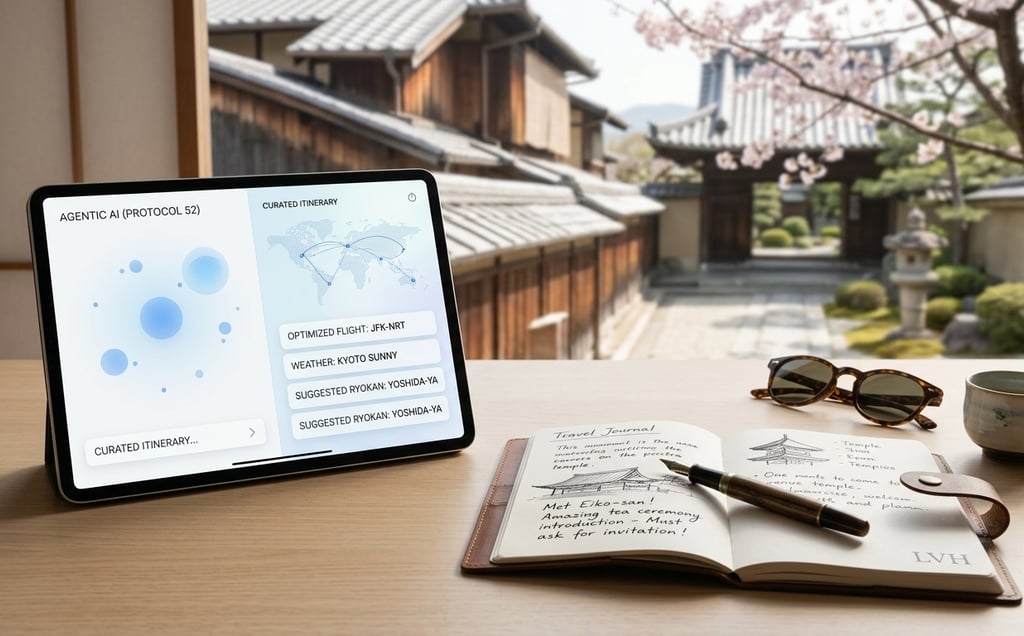
Current AI usage is expected to evolve into a new era of “agentic AI,” where personalized digital assistants gather information from across the internet based on each user’s preferences, interests, and history. AI is also driving the growth of “Innovation Tourism,” as travelers seek technologically advanced destinations offering experiences such as autonomous taxis, biometric airport gateways, and virtual reality “try-before-you-buy” services. Nearly 59% of travelers say they would be interested in such experiences.
• Supporting Travel and Hospitality Providers
For travel companies and hotels, AI is not viewed as a replacement for human interaction but rather as a powerful support tool. It enables businesses to personalize services more effectively, better understand the needs of high-spending and premium clients, and deliver tailored experiences while preserving customer privacy.
Conclusion
Artificial intelligence is no longer merely a travel-planning assistant; it has become a strategic partner in shaping the entire travel experience, from initial inspiration to booking and accommodation. Nevertheless, human judgment and personal experience remain essential to ensuring accuracy, building trust, and making the best possible travel decisions.
lux Voyage Hub
A destination for those who demand the extraordinary — curating the world's finest travel experiences since 2024.
Discover
Experiences
contact@luxvoyagehub.com
+33 0763725182
© 2026. All rights reserved. nothingconcepts
Company